Skip to content

24/7 dementia helpline 800-272-3900

Dementia Today

Study examines inosine to increase urate levels in patients with Parkinson disease

Dementia TodayPublished December 24, 20132 min read
Study examines inosine to increase urate levels in patients with Parkinson disease

Key points

  • Animal experiments suggest that urate may protect against PD, and higher blood urate levels are associated with reduced risk and slower progression of PD, according to the study background.
  • Blood (serum) urate levels rose by 2.3 and 3.0 mg/dL in the two inosine groups vs. placebo, and cerebrospinal fluid (CSF) urate levels were greater in both inosine groups.
  • Published online December 23, 2013. doi:10.1001/.jamaneurol.2013.5528.
  • Patients were administered inosine in 500-mg capsules taken orally.

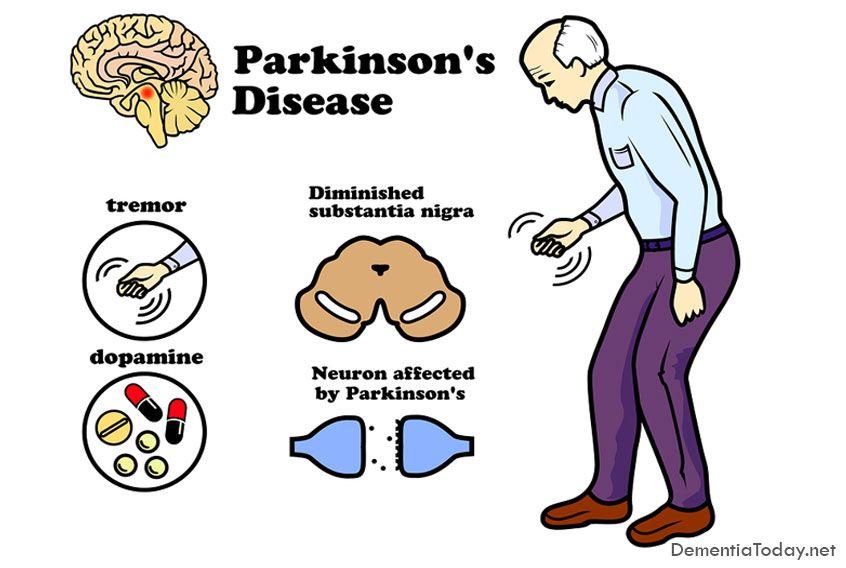
The drug inosine appears to be a safe and effective way to raise blood and cerebrospinal fluid urate levels in patients with early Parkinson disease (PD), suggesting it may be a potential strategy to slow the disability progression of the degenerative neurological disorder, according to a report published by JAMA Neurology, a JAMA Network publication.

Urate is an end product of human metabolism. Animal experiments suggest that urate may protect against PD, and higher blood urate levels are associated with reduced risk and slower progression of PD, according to the study background. Inosine is a drug that raises urate levels and therefore may be useful for PD.

Researchers in the Parkinson Disease Study Group SURE-PD (Safety of Urate Elevation in PD) trial randomized 75 patients with early PD (average age 62 years and not yet requiring treatment for their symptoms) to placebo or doses of inosine to produce mild or moderate elevation in blood urate levels to examine the safety, tolerability and ability of inosine to elevate urate levels. Patients were administered inosine in 500-mg capsules taken orally.

Blood (serum) urate levels rose by 2.3 and 3.0 mg/dL in the two inosine groups vs. placebo, and cerebrospinal fluid (CSF) urate levels were greater in both inosine groups. Serious adverse events (17) occurred at the same or lower rates in the inosine groups compared to placebo. The treatment also was tolerated by 95 percent of patients at six months and no participants withdrew because of an adverse event.

“The results of the SURE-PD trial demonstrate that oral inosine treatment in early PD is clinically safe and tolerable and produces an increase in serum and CSF urate. … The present findings support the development of a more definitive trial to investigate the ability of inosine treatment to slow clinical progression among persons with early PD who have lower urate,” the authors conclude.

###

(JAMA Neurol. Published online December 23, 2013. doi:10.1001/.jamaneurol.2013.5528. Available pre-embargo to the media at http://media.jamanetwork.com).

Editor’s Note: This project was funded by a grant from the MJFF. Additional support was provided by a National Institutes of Health grant, the Harvard NeuroDiscovery Center, the RJG Foundation and the Parkinson’s Disease Foundation Advancing Parkinson’s Therapies initiative. Conflict of interest disclosures were made. Please see the articles for additional information, including other authors, author contributions and affiliations, financial disclosures, funding and support, etc.

###

Mike Morrison
mdmorrison@partners.org
617-724-6425
The JAMA Network Journals
The content on this site is for information only and is not a substitute for professional medical advice, diagnosis or treatment. If a person with dementia is missing, injured or in danger, call 911 or your local emergency number.

Being underweight linked to higher dementia risk
Aging & Dementia

Being underweight linked to higher dementia risk

In the largest study ever to look at relationships between body weight and likelihood of developing dementia, researchers found that being too thin appears to carry the greatest risk. Among nearly two million people in the U.K. observed over time,

4 min read

Worried about memory changes?

Normal aging, or an early warning sign?

Ten common changes, each set beside what is typical with age. Tick what you have noticed and see what to do next.

Open the 10-sign checklist

Getting help

Sudden changes are not just the dementia.

Dementia usually changes slowly. A sharp change over hours or days can mean an infection, delirium, a stroke or a medication problem, and needs a doctor the same day. Call 911 or your local emergency number if you see any of these:

  • Confusion that comes on suddenly, over hours or days
  • Face drooping, arm weakness or slurred speech
  • A fall, a head injury or new severe pain
  • Very drowsy or hard to wake

The free Alzheimer’s Association Helpline answers questions about memory loss, diagnosis and caregiving, day and night, in more than 200 languages (US).

If someone with dementia is missing

  1. STEP 115 minSearch close by firstCheck the house, garden, car and the places the person often walks to. Don’t spend longer than about 15 minutes.
  2. STEP 2911Then call for helpTell the operator the person has dementia and is a vulnerable adult. Police treat this as urgent.
  3. STEP 3PhotoHave details readyA recent photo, what they were wearing, medical conditions and places they used to live or work.

Based on Alzheimer’s Association guidance on wandering. Outside the US, call your local emergency number.