Skip to content

24/7 dementia helpline 800-272-3900

Dementia Today

Cinnamon May Be Used to Halt the Progression of Parkinson’s disease

Dementia TodayPublished July 9, 20143 min read
Cinnamon May Be Used to Halt the Progression of Parkinson’s disease

Key points

  • Neurological scientists at Rush University Medical Center have found that using cinnamon, a common food spice and flavoring material, can reverse the biomechanical, cellular and anatomical changes that occur in the brains of mice with Parkinson’s disease (PD).
  • “Cinnamon is metabolized in the liver to sodium benzoate, which is an FDA-approved drug used in the treatment for hepatic metabolic defects associated with hyperammonemia,” said Pahan.
  • “Although both types of cinnamon are metabolized into sodium benzoate, by mass spectrometric analysis, we have seen that Ceylon cinnamon is much more pure than Chinese cinnamon as the latter contains coumarin, a hepatotoxic molecule,” said Pahan.
  • The study found that after oral feeding, ground cinnamon is metabolized into sodium benzoate, which then enters into the brain, stops the loss of Parkin and DJ-1, protects neurons, normalizes neurotransmitter levels, and improves motor functions in mice with PD.

Neurological scientists at Rush University Medical Center have found that using cinnamon, a common food spice and flavoring material, can reverse the biomechanical, cellular and anatomical changes that occur in the brains of mice with Parkinson’s disease (PD). The results of the study were recently published in the June 20 issue of the Journal of Neuroimmune Pharmacology.

“Cinnamon has been used widely as a spice throughout the world for centuries,” said Kalipada Pahan, PhD, study lead researcher and the Floyd A. Davis professor of neurology at Rush. “This could potentially be one of the safest approaches to halt disease progression in Parkinson’s patients.”

“Cinnamon is metabolized in the liver to sodium benzoate, which is an FDA-approved drug used in the treatment for hepatic metabolic defects associated with hyperammonemia,” said Pahan. It is also widely used as a food preservative due to its microbiocidal effect.

Chinese cinnamon (Cinnamonum cassia) and original Ceylon cinnamon (Cinnamonum verum) are two major types of cinnamon that are available in the US.

“Although both types of cinnamon are metabolized into sodium benzoate, by mass spectrometric analysis, we have seen that Ceylon cinnamon is much more pure than Chinese cinnamon as the latter contains coumarin, a hepatotoxic molecule,” said Pahan.

“Understanding how the disease works is important to developing effective drugs that protect the brain and stop the progression of PD,” said Pahan. “It is known that some important proteins like Parkin and DJ-1 decrease in the brain of PD patients.”

The study found that after oral feeding, ground cinnamon is metabolized into sodium benzoate, which then enters into the brain, stops the loss of Parkin and DJ-1, protects neurons, normalizes neurotransmitter levels, and improves motor functions in mice with PD.

This research was supported by grants from National Institutes of Health.

“Now we need to translate this finding to the clinic and test ground cinnamon in patients with PD. If these results are replicated in PD patients, it would be a remarkable advance in the treatment of this devastating neurodegenerative disease,” said Dr. Pahan.

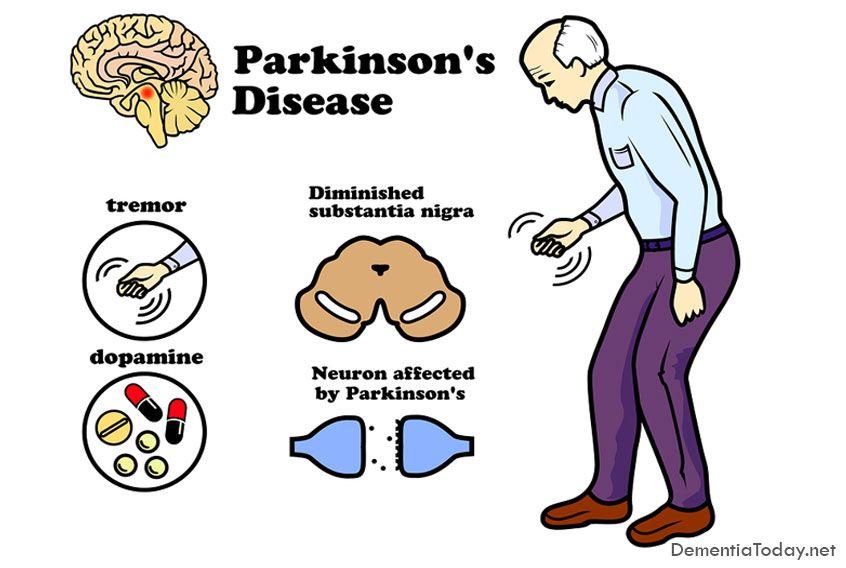
Parkinson’s disease is a slowly progressive disease that affects a small area of cells within the mid-brain known as the substantia nigra. Gradual degeneration of these cells causes a reduction in a vital chemical neurotransmitter, dopamine. The decrease in dopamine results in one or more of the classic signs of Parkinson’s disease that includes: resting tremor on one side of the body; generalized slowness of movement; stiffness of limbs; and gait or balance problems. The cause of the disease is unknown. Both environmental and genetic causes of the disease have been postulated.

Parkinson’s disease affects about 1.2 million patients in the United States and Canada. Although 15 percent of patients are diagnosed before age 50, it is generally considered a disease that targets older adults, affecting one of every 100 persons over the age of 60. This disease appears to be slightly more common in men than women.

###

Rush University Medical Center, Chicago, Illinois
The content on this site is for information only and is not a substitute for professional medical advice, diagnosis or treatment. If a person with dementia is missing, injured or in danger, call 911 or your local emergency number.

Being underweight linked to higher dementia risk
Aging & Dementia

Being underweight linked to higher dementia risk

In the largest study ever to look at relationships between body weight and likelihood of developing dementia, researchers found that being too thin appears to carry the greatest risk. Among nearly two million people in the U.K. observed over time,

4 min read

Worried about memory changes?

Normal aging, or an early warning sign?

Ten common changes, each set beside what is typical with age. Tick what you have noticed and see what to do next.

Open the 10-sign checklist

Getting help

Sudden changes are not just the dementia.

Dementia usually changes slowly. A sharp change over hours or days can mean an infection, delirium, a stroke or a medication problem, and needs a doctor the same day. Call 911 or your local emergency number if you see any of these:

  • Confusion that comes on suddenly, over hours or days
  • Face drooping, arm weakness or slurred speech
  • A fall, a head injury or new severe pain
  • Very drowsy or hard to wake

The free Alzheimer’s Association Helpline answers questions about memory loss, diagnosis and caregiving, day and night, in more than 200 languages (US).

If someone with dementia is missing

  1. STEP 115 minSearch close by firstCheck the house, garden, car and the places the person often walks to. Don’t spend longer than about 15 minutes.
  2. STEP 2911Then call for helpTell the operator the person has dementia and is a vulnerable adult. Police treat this as urgent.
  3. STEP 3PhotoHave details readyA recent photo, what they were wearing, medical conditions and places they used to live or work.

Based on Alzheimer’s Association guidance on wandering. Outside the US, call your local emergency number.