Skip to content

24/7 dementia helpline 800-272-3900

Dementia Today

Mere expectation of treatment can improve brain activity in Parkinson’s patients

Dementia TodayPublished November 26, 20143 min read
Mere expectation of treatment can improve brain activity in Parkinson’s patients

Key points

  • Learning-related brain activity in Parkinson’s patients improves as much in response to a placebo treatment as to real medication, according to a new study by researchers at the University of Colorado Boulder and Columbia University.
  • “The findings highlight the power of expectations to drive changes in the brain,” said Tor Wager, an associate professor of psychology and neuroscience at CU-Boulder and a co-author of the study.
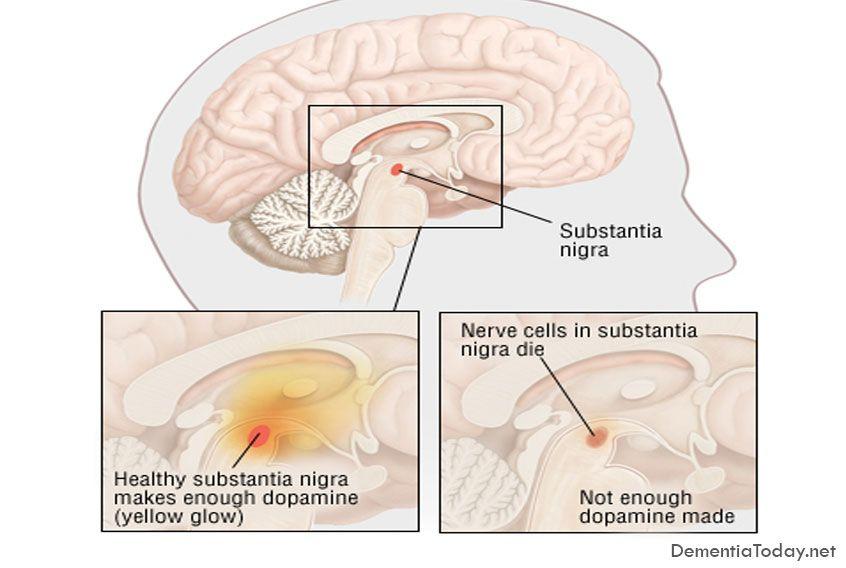
  • Reward learning is impaired in Parkinson’s patients because the disease causes the neurons that release dopamine to die.
  • The Parkinson’s patients played the game three times: when they were not taking any medication, when they took real medication (dissolved in orange juice), and when they took a placebo, which consisted of drinking orange juice that they thought contained their medication.

Learning-related brain activity in Parkinson’s patients improves as much in response to a placebo treatment as to real medication, according to a new study by researchers at the University of Colorado Boulder and Columbia University.

Past research has shown that while Parkinson’s disease is a neurological reality, the brain systems involved may also be affected by a patient’s expectations about treatment. The new study, published in the journal Nature Neuroscience, explains how the placebo treatment – when patients believe they have received medication when they have not – works in people with Parkinson’s disease by activating dopamine-rich areas in the brain.

“The findings highlight the power of expectations to drive changes in the brain,” said Tor Wager, an associate professor of psychology and neuroscience at CU-Boulder and a co-author of the study. “The research highlights important links between psychology and medicine.”

Parkinson’s patients have difficulty with “reward learning,” the brain’s ability to associate actions with rewards and make motivated decisions to pursue positive outcomes. Reward learning is supported by neurons that emit dopamine when an action, like pushing a particular button, leads to a reward, like receiving money.

Reward learning is impaired in Parkinson’s patients because the disease causes the neurons that release dopamine to die. Parkinson’s patients can be treated for this condition with a medication that increases the dopamine in the brain, L-dopa.

For the new study, the research team – which also includes Columbia University researchers Liane Schmidt, Erin Kendall Braun and Daphna Shohamy – used functional Magnetic Resonance Imaging (fMRI) to scan the brains of 18 Parkinson’s patients as they played a computer game that measures reward learning. In the game, participants discover through trial and error which of two symbols is more likely to lead to a better outcome, in this case a small monetary reward or simply not losing any money.

The Parkinson’s patients played the game three times: when they were not taking any medication, when they took real medication (dissolved in orange juice), and when they took a placebo, which consisted of drinking orange juice that they thought contained their medication. The researchers found that the dopamine-rich areas of the brain associated with reward learning – the striatum and the ventromedial prefrontal cortex – became equally active when patients took either the real medication or the placebo treatment.

“This finding demonstrates a link between brain dopamine, expectation and learning,” Wager said. “Recognizing that expectation and positive emotions matter has the potential to improve the quality of life for Parkinson’s patients, and may also offer clues to how placebos may be effective in treating other types of diseases.”

###

The study was funded by the Michael J. Fox Foundation for Parkinson’s Research.

###

Tor Wager
Tor.Wager@colorado.edu
303-492-7487
University of Colorado at Boulder
The content on this site is for information only and is not a substitute for professional medical advice, diagnosis or treatment. If a person with dementia is missing, injured or in danger, call 911 or your local emergency number.

What’s Causing Your Memory Loss?
Aging & Dementia

What’s Causing Your Memory Loss?

Everyone forgets things at some time. How often have you misplaced your car keys or forgotten the name of a person you just met? Some degree of memory problems, as well as a modest decline in other thinking skills, is

11 min read

Worried about memory changes?

Normal aging, or an early warning sign?

Ten common changes, each set beside what is typical with age. Tick what you have noticed and see what to do next.

Open the 10-sign checklist

Getting help

Sudden changes are not just the dementia.

Dementia usually changes slowly. A sharp change over hours or days can mean an infection, delirium, a stroke or a medication problem, and needs a doctor the same day. Call 911 or your local emergency number if you see any of these:

  • Confusion that comes on suddenly, over hours or days
  • Face drooping, arm weakness or slurred speech
  • A fall, a head injury or new severe pain
  • Very drowsy or hard to wake

The free Alzheimer’s Association Helpline answers questions about memory loss, diagnosis and caregiving, day and night, in more than 200 languages (US).

If someone with dementia is missing

  1. STEP 115 minSearch close by firstCheck the house, garden, car and the places the person often walks to. Don’t spend longer than about 15 minutes.
  2. STEP 2911Then call for helpTell the operator the person has dementia and is a vulnerable adult. Police treat this as urgent.
  3. STEP 3PhotoHave details readyA recent photo, what they were wearing, medical conditions and places they used to live or work.

Based on Alzheimer’s Association guidance on wandering. Outside the US, call your local emergency number.